
Work
Helping youth prepare for work with more confidence, support, and independence
Working with juvenile arthritis or another childhood rheumatic disease can bring new questions around symptoms, fatigue, disclosure, accommodations, scheduling, and work-life balance.
This page brings together practical guidance, workplace advocacy resources, and lived-experience support to help teens and young adults understand their rights, prepare for conversations at work, and build confidence as they take on more independence.

Work + Rheumatic Disease
A practical resource for teens and young adults entering the workforce.
Working with juvenile arthritis or another childhood rheumatic disease can bring questions around symptoms, fatigue, disclosure, accommodations, scheduling, and work-life balance.
Cassie + Friends partnered with the Institute for Work & Health to develop a workplace resource for teens and young adults with rheumatic disease. It offers practical information to help youth understand their rights, advocate for their needs, and navigate work with more confidence.
Advocating for Your Needs at Work
Knowing what to ask for can make work feel more manageable.

Every workplace is different, and every person’s needs are different. Some youth may need support with scheduling, breaks, physical tasks, appointments, fatigue, pain, or symptom flares. Others may simply need a plan for what to do if their health changes during a shift.
Advocating for your needs does not mean sharing everything about your condition. It means understanding what support may help you do your job safely and confidently — and knowing when and how to ask for it.
Support Areas
Disclosure
Decide what, when, and how much you want to share about your condition.
Accommodations
Think through practical supports like modified duties, flexible scheduling, breaks, seating, or task adjustments.
Symptoms at Work
Plan for pain, fatigue, stiffness, medication timing, appointments, or flare-ups.
Confidence
Practice how to explain your needs clearly and professionally.
Plan for Work-Life Balance
Balancing health, work, and everyday life takes practice.
A job can be an important step toward independence, but it can also add pressure to an already full schedule. Youth may be balancing work with school, appointments, treatment routines, social life, rest, and symptoms that change from day to day.
Planning ahead can help youth choose work that fits their needs, build routines that support their health, and recognize when they may need to adjust. The goal is not to avoid responsibility — it’s to build a sustainable rhythm that supports both work and wellbeing.
Support Points
Energy + Fatigue
Pay attention to how shifts, travel, standing, or repetitive tasks affect energy.
Scheduling
Consider appointment times, treatment routines, school demands, and rest days.
Type of Work
Think about whether the role’s physical, social, or stress demands are a good fit.
Adjusting Over Time
Needs may change during flares, busy seasons, school terms, or treatment changes.
Work Videos +Webinars
Learn from experts and young adults with lived experience.
These videos offer practical guidance on workplace advocacy, knowing your rights, asking for support, and managing work alongside rheumatic disease.
Use them to prepare for workplace conversations, think through accommodations, and hear from people who understand the transition into young adulthood.

Advocating for Your Rheumatic Disease Needs in the Workplace
Brought to you in collaboration with the Institute of Work and Health, JIA Transition Clinic at Women’s College Hospital, Toronto and young adults with lived experience, this webinar delves into the realm “Beyond Transition” and the doctor’s office, focusing on advocating for health needs in the workplace.
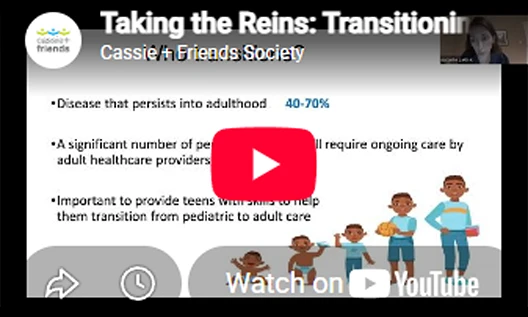
Taking the Reins: Transitioning From Pediatric to Adult Care

C+F Virtual Youth Panel: Growing Up with Rheumatic Disease
Listen to five young adults from across Canada reflecting on their experiences growing up with Juvenile Arthritis, Lupus and Uveitis. Topics include: resiliency in the face chronic disease, tips for medications/needle phobia, the role of parents/caregivers, mental health, self advocating at school, transitioning into adult care, staying active in sports/physical activity and the importance of finding balance with self-care during #COVID19.
Additional Resources

Use these tools to prepare for school conversations, support your child’s daily routine, and help create a more informed school environment.
Related resources are here for you.
Keep Building Independence
As youth take on more responsibility, questions about work, school, healthcare, relationships, travel, and daily routines can all come up. Cassie + Friends has additional transition resources to help teens and young adults keep building confidence, self-advocacy, and independence.