
Mental Healthfor Caregivers
Support for parents and caregivers carrying the emotional weight of chronic illness
Caring for a child with juvenile arthritis or another childhood rheumatic disease can be emotionally demanding. Alongside appointments, treatments, school needs, pain, uncertainty, and daily routines, caregivers may also experience stress, grief, worry, exhaustion, or anxiety.
This page brings together caregiver-focused support to help parents and caregivers recognize their own needs, build coping strategies, and find tools that support both their wellbeing and their child’s care.

Caregivers Need Support Too
Supporting a child starts with recognizing your own needs.
When a child is living with juvenile arthritis or another childhood rheumatic disease, caregivers often carry a lot — appointments, treatments, school communication, pain management, uncertainty, and the emotional ups and downs that come with chronic illness.
It is common for caregivers to feel stressed, overwhelmed, worried, or emotionally drained. Taking care of your own mental health is not selfish. It helps you stay steady, connected, and better able to support your child over time.
The current C+F caregiver resource specifically focuses on helping parents manage the emotional rollercoaster of parenting a child with a chronic medical condition, including grief, chronic sorrow, anxiety, depression, stress, and self-care.
Self-Care for Caregivers
Practical self-care tools for parents and caregivers.
Caregiving can bring grief, stress, worry, and emotional fatigue — especially when your child is living with a chronic medical condition. This caregiver workshop helps parents better understand their emotions, recognize when anxiety or depression may need professional support, and identify coping strategies that can help them rest, recharge, and keep going.
The session focuses on practical tools for managing difficult feelings, understanding chronic sorrow, and building self-care strategies that fit real family life.
Understand Your Emotions
Recognize grief, chronic sorrow, stress, and emotional overwhelm.
Know When to Seek Help
Learn signs of anxiety or depression that may need professional support.
Build Coping Strategies
Find practical ways to manage stress and difficult feelings.
Make Self-Care Realistic
Explore wellness strategies that can fit into everyday caregiving life.
The Emotional Side
Stress, grief, worry, and exhaustion can be part of the caregiving experience.

Caregivers may feel pressure to stay strong while managing appointments, treatments, medications, school needs, pain, and uncertainty. Over time, that emotional load can become heavy.
Some caregivers may experience grief or chronic sorrow — ongoing feelings of sadness, worry, or loss connected to their child’s diagnosis and changing needs. These feelings are real, and they do not mean you are failing. They are a sign that you may need more support, rest, connection, or help from your care team.
Stress + Overwhelm
Managing care, family life, work, and appointments can take a toll.
Grief + Chronic Sorrow
Caregivers may grieve the life they imagined for their child or family.
Worry + Uncertainty
Symptoms, flares, treatment decisions, and the future can feel hard to predict.
Connection + Support
Talking with others who understand can help caregivers feel less alone.
Self-Care Strategies

Self-care does not have to mean doing everything perfectly or finding extra time you do not have. For caregivers, it can mean building small moments of support into the day, asking for help, noticing when stress is building, and finding ways to recharge before things become overwhelming.
Even simple strategies can help caregivers feel more grounded and better supported over time.
Check In With Yourself
Notice signs of stress, exhaustion, anxiety, sadness, or burnout.
Ask for Support
Reach out to your care team, family, friends, counsellors, or support networks.
Make Rest Possible
Look for small ways to pause, recharge, or reduce pressure where you can.
Stay Connected
Talking with other caregivers can reduce isolation and help you feel understood.
When to Get More Help
Extra support may be helpful when stress, anxiety, sadness, or exhaustion starts affecting daily life — for you, your child, or your family.
The current C+F caregiver resource encourages families to seek more help if anxiety, depression, or behaviour concerns are interfering with home life, school, peer relationships, or medical care. It also notes that support may be needed if a child or teen is still struggling after trying coping strategies.
Daily Life Feels Harder
Stress, anxiety, or low mood is affecting home, school, work, or relationships.
Coping Strategies Are Not Enough
You or your child are still struggling after trying support tools or strategies.
Medical Care Is Being Affected
Anxiety, depression, behaviour concerns, or fear are making appointments, treatments, or routines harder.
You Feel Burned Out
You feel emotionally drained, overwhelmed, disconnected, or unsure how to keep going.
Videos + Webinars
Practical guidance for caregiver self-care and emotional support.
This caregiver-focused workshop offers practical tools for managing stress, difficult emotions, chronic sorrow, anxiety, depression, and the emotional demands of parenting a child with a chronic medical condition.

Putting On Your Life Jacket: Self-Care for Caregivers
As a part of our 2023 Youth Mental Health Strategy, we were pleased to host a roundtable conversation with experts from across the country highlighting the need for better mental health screening, protocols and services in pediatric rheumatology across the country.

Ask the Expert: Youth Mental Health in Pediatric Rheumatology
As a part of our 2023 Youth Mental Health Strategy, we were pleased to host a roundtable conversation with experts from across the country highlighting the need for better mental health screening, protocols and services in pediatric rheumatology across the country.
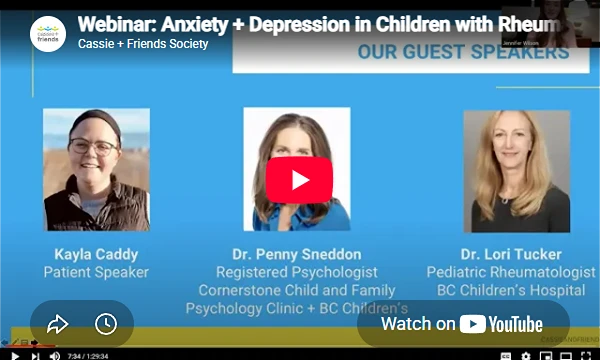
Anxiety + Depression in Children with Rheumatic Disease
We hosted a conversation on #youthmentalhealth and #rheumaticdisease with a panel of experts! Learn about current research, initiatives, what you can do as a parent or patient and next steps for everyone.
Additional Resources

Use these resources to learn more about anxiety, depression, coping strategies, counselling options, and support services for youth and families.
Helpful tools for anxiety, depression, coping, and emotional support.
When is it Time
to Get More Help
Consider reaching out for more support if anxiety, depression, or stress is significantly interfering with home life, school, peer relationships, medical care, or your family’s ability to cope day to day.Living with a rheumatic disease can affect school, friendships, confidence, pain, stress, and daily life — but youth do not have to navigate it alone. Cassie + Friends offers programs, mentorship, stories, and community support to help young people feel understood and supported as they grow.
Additional Support

Related Mental Health tools and useful resources are here for you.