
Pave
Study
Making sure what matters to families counts in JIA research and healthcare decisions.
Juvenile idiopathic arthritis (JIA) affects much more than joints. It can shape school, work, family finances, mental health, access to care and everyday life.
The international PAVE Study is working with patients and families to better understand and measure these impacts—so future healthcare decisions reflect what living with JIA is really like.
Cassie + Friends is a patient and family research partner in PAVE, helping ensure lived experience shapes the research from beginning to end.

Share Your Experience
Help change what gets counted.
The PAVE Study is helping researchers better understand how juvenile idiopathic arthritis affects children, youth, and families in everyday life. Through patient and family input, the study aims to identify the real-world impacts of JIA — including financial, social, educational, and quality-of-life challenges.
Cassie + Friends is proud to support PAVE by helping bring patient and family voices into the research process.
Who Can Participate
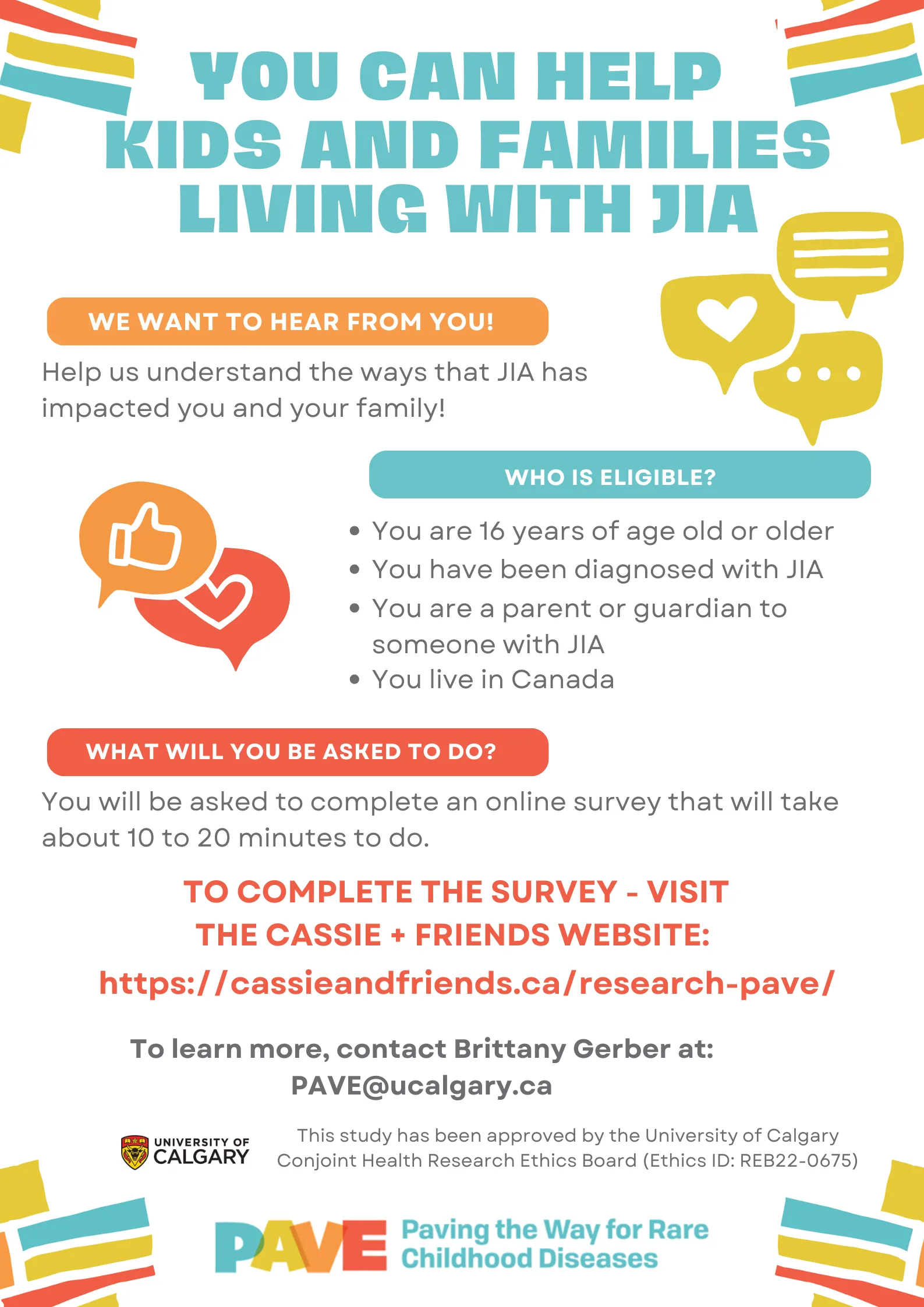
You may be eligible to participate in the PAVE survey if you are:
- 16 years of age or older *NEW* Now open to youth aged 16+
- Someone diagnosed with JIA
- A parent/guardian of someone diagnosed with JIA
- Currently living in Canada
The online survey takes approximately 15–20 minutes to complete. You can save your responses and return later using the same browser and device.
Questions about participating? Contact the PAVE research team at PAVE@ucalgary.ca.
This study has been approved by the University of Calgary Conjoint Health Research Ethics Board (Ethics ID: REB22-0675).
What is PAVE?
Looking beyond the medical costs of JIA.
PAVE stands for Producing an Arthritis Value-Framework with Economic Evidence.
It is an international, patient-centred research collaboration involving Canada, Germany, Switzerland, Spain, Israel and Belgium.
PAVE is working to create a more complete way of understanding the impact—or “value”—of JIA care.
A value framework is simply a way of deciding what outcomes and impacts should count when healthcare is evaluated and decisions are made.
Traditionally, health systems may focus heavily on the cost of medical care and clinical measures of disease. Those things matter—but they do not tell the whole story.
PAVE asks a broader question:
What does JIA really mean for a child, a family and society—and what outcomes matter most to the people living with it?
Patients, parents and researchers are working together to build a framework that considers not only healthcare costs and clinical outcomes, but also the broader financial, educational, emotional, social and day-to-day effects of JIA.
Why This Study Matters
JIA affects more than joints.
For families, the impact of juvenile arthritis can reach into almost every part of life.
It can mean:
- travelling long distances for specialist care
- paying out of pocket for medications, therapies, equipment or other supports
- parents reducing work hours or missing work for appointments and caregiving
- children and youth missing school or struggling to keep up
- young adults navigating education and employment while managing a chronic disease
- stress, uncertainty and mental health impacts for the whole family
- differences in access to treatment and care depending on where a family lives
Yet many of these impacts are not routinely captured when healthcare programs, policies and investments are evaluated.
If we don’t measure what families experience, it is harder for health systems to respond to it.
PAVE is working to make those hidden impacts visible—and turn lived experience into evidence that can help shape better decisions.
Cassie + Friends Role with PAVE
Research with families, not just about families.
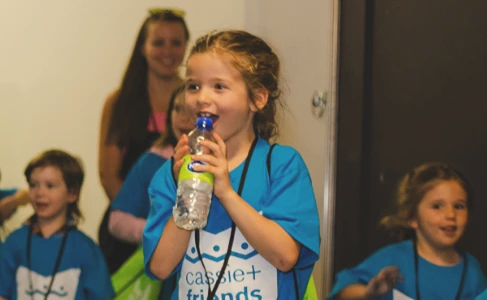
Cassie + Friends believes children, youth and families should have a meaningful voice in the research that affects their lives.
That’s why we are proud to be a patient and family research partner in PAVE.
Our involvement goes beyond sharing a survey.
Cassie + Friends works alongside researchers and patient and parent partners to:
Bring family priorities into the research
We help ensure the questions being asked reflect the realities and concerns we hear from families living with JIA.
Build meaningful patient partnership
We help connect people with lived experience to opportunities to contribute their knowledge and perspectives throughout the research process.
Connect researchers with the wider JIA community
We help families across Canada learn about the study and opportunities to participate.
Turn research into knowledge families can use
As findings emerge, we help translate and share them with families, healthcare teams, decision-makers and our community.
This is part of Cassie + Friends’ Care to Cure approach: connecting what families experience today with the research and system change needed to create a better tomorrow.
“Being part of research made us feel like we were contributing to something bigger. It gave us a sense of purpose during a challenging time.”
— Parent, Cassie + Friends Community
From Family Experience to Better Care
What families experience
↓
What researchers measure
↓
What health systems understand
↓
How care, policies and resources are planned
Better evidence can lead to better decisions—and ultimately, better care.
How Could PAVE Make a Difference?
Making the invisible visible.
PAVE will not change healthcare on its own. But better evidence can help researchers, healthcare leaders and policymakers understand where families experience the greatest burden and where care and supports may need to change.
Over time, this work could help inform:
- healthcare planning and policy
- decisions about where resources are invested
- improved support for children, youth and caregivers
- more equitable access to care
- future research priorities
- how the value of new treatments and approaches to care is assessed
Most importantly, it can help ensure that what matters to patients and families is part of the evidence used to make decisions about their care.
Research Resources

Explore and participate in ongoing research.
Support Us
Meet Our Patient + Parent Partners
Lived experience is part of the research team.
PAVE is being shaped alongside people who know JIA firsthand.
Patients and parents bring expertise that cannot be found in medical records or research data alone. Their perspectives help researchers understand what should be measured, what questions need to be asked and what meaningful outcomes really look like.
Meet some of the Canadian patient and parent research partners contributing to PAVE.
Patient Partners

Alejandra
Alejandra was diagnosed with polyarticular JIA shortly before her second birthday. Now approaching the transition from pediatric to adult care, she brings firsthand experience of growing up with JIA and navigating a major change in healthcare. She hopes her involvement in research will improve the experience of future youth and families.

John
John first developed joint pain at age nine but was not diagnosed with enthesitis-related JIA and inflammatory bowel disease until age 14. His experience with delayed diagnosis and significant loss of mobility has shaped his passion for patient advocacy, health equity and making sure people who fall through gaps in the healthcare system are seen and heard.

Kayla
Kayla’s symptoms began in middle school, although she was not diagnosed with arthritis until university. Growing up in a small community meant travelling for specialist care, missing school and requiring her mother to take time away from work. She brings an important perspective on rural access, education and the financial and social impacts of JIA.

Kira
Diagnosed with an autoinflammatory disease similar to Still’s disease at age 17 after two years of symptoms, Kira knows firsthand the challenges of living with a rheumatic disease in Canada’s North. Growing up in Yellowknife gives her an important perspective on geography, access to specialist care and the experience of families living remotely.

Lauren
Diagnosed with JIA at age three, Lauren has navigated childhood, adolescence and the transition to adult rheumatology care with chronic disease. Now a patient researcher, she is passionate about peer support, patient partnership and ensuring young people have the resources and care they need to live full and healthy lives.

Morgan
Morgan has lived with arthritis since age eight. Her involvement with Cassie + Friends led her to the University of Calgary’s Patient and Community Engagement Research program, where she participated in research on the transition from pediatric to adult JIA care. That experience sparked a lasting interest in patient-oriented research and the broader impacts of childhood arthritis.

Natasha
Natasha is a trained patient researcher and founder of the Take a Pain Check Foundation. Through research, advocacy and peer engagement, she works to strengthen the voice of young people living with rheumatic diseases and bring patient perspectives into healthcare research and decision-making.
Parent +
Caregiver Partners

Betts
Betts is a registered nurse and the mother of Lauren, who was diagnosed with JIA at age two. More than 15 years of navigating pediatric rheumatology and the transition to adult care give her a long-term caregiver perspective on the supports families need. Today, both Betts and Lauren contribute to PAVE as research partners.

Erik
Erik brings more than 20 years of lived experience as the father of Alejandra, who was diagnosed with JIA as a young child. An educator by profession, he hopes his family’s experience can help researchers better understand the long-term impact childhood arthritis can have on children and their families.
Janna
Janna is a mother of four and works as a counsellor in a high school setting. She brings both family experience and a professional understanding of the social and emotional challenges young people can face, helping broaden the perspectives represented in the research.

Jaslene
Jaslene’s daughter, Laila, was diagnosed with JIA at six years old. Living in a rural area meant their family struggled to access the specialized care and supports she needed and ultimately relocated to a larger centre. Jaslene brings powerful insight into rural access, advocacy and the changes families sometimes have to make in order to obtain care.

Lisa
Lisa’s daughter, Kylie, was diagnosed with JIA at age five and later with uveitis. With a professional background in medical laboratory and x-ray sciences and post-secondary health education, Lisa brings both a parent and healthcare education perspective to understanding treatment, family needs and navigating ongoing care.
Trish
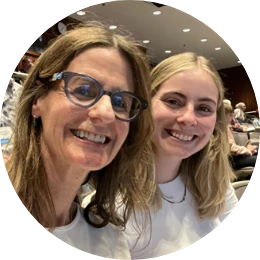
Trish became connected with the juvenile arthritis community after her daughter Morgan was diagnosed at age eight. A communications professional and Cassie + Friends board member, she brings years of experience supporting her daughter alongside a passion for helping organizations and communities tell stories that drive change.

Sam
Sam is a municipal councillor and project leader whose daughter was diagnosed with JIA at age six. His family’s experience navigating diagnosis and care motivates him to contribute to research that can make systems more responsive and supportive for children and families.
More Youth Stories

#KidsCantWait: Kylie’s Journey
Seek out ways to connect with other families to talk more about what recommendations they have and just feel like you aren’t alone! I

#KidsCantWait: Laila’s Journey
We felt lost in the process—how could we advocate for her when we didn’t even fully understand what was going on? It was frustrating, exhausting, and confusing.
Blending Lived Experience with Research: Brittany’s Story
Hi! I’m Brittany – and I’m here to share with you a bit about my experience as someone who works in health research and lives with Ankylosing Spondylitis! I currently work as a Senior Research Associate at the University of Calgary, where I’ve had the opportunity to work on projects…
Our Findings
What are we learning?
Early PAVE research has highlighted an important gap: the true impact of JIA extends far beyond healthcare costs.
Traditional research has often focused on direct medical costs and clinical outcomes. But patients and families may also experience effects on employment, education, caregiving, travel, mental health, access to care, family finances and quality of life.
Understanding these broader impacts is an important step toward building a patient- and family-informed framework for assessing the value of JIA care.
Read the Research
Uncovering the hidden socioeconomic impact of juvenile idiopathic arthritis and paving the way for other rare childhood diseases: an international, cross-disciplinary, patient-centered approach (PAVE Consortium)
Pediatric Rheumatology, August 2024
Want to Learn More?
If you have questions or would like to learn more about the PAVE Study, please contact our research team:
This study has been approved by the University of Calgary Conjoint Health Research Ethics Board (Ethics ID: REB22-0675).