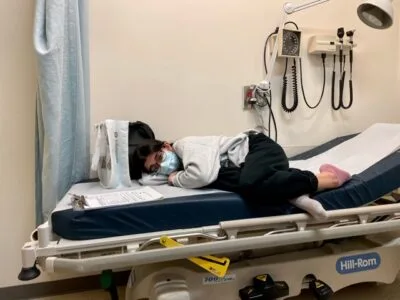
To recognize rare disease day, we want to shine a light on all rare diseases, including the story of Zahra, whose rare autoinflammatory disease is still unknown, despite extensive genetic testing. Rare diseases affect 300 million people worldwide, and many of the 24,000 children in Canada in the pediatric rheumatic disease community are affected by rare or very rare diseases. Learn more about rare diseases here.
Hi everyone! My name is Zahra, and I am 20 years old and from Toronto. I have a systemic autoinflammatory disease, but the exact subtype is still unknown. I have had extensive genetic testing showing a few different inflammatory mutations, and we are waiting for further results to hopefully finalize a diagnosis.
My journey with inflammatory disease has been far from typical. As a young child, I would get frequent infections and fevers, and I eventually had my tonsils removed which helped significantly. We thought this chapter would close after that. However, a couple of years later, I had a severe concussion at school and since then I have been dealing with autoinflammatory disease. I am on Biologics which has been life-changing for the better.
Transitioning into adult care was one of the scariest things for me. It felt like I was thrown into this new world with doctors who did not know me, and I was the youngest one in all the waiting rooms. While it was a hard transition, it is an inevitable one and I learnt so much about advocacy. While your records and results are all sent over, it is important to be knowledgeable about your disease and symptoms. Your medical team can only help you if you paint the full picture for them.
It’s important to remember that you have lived with this and know your body best. I find it helpful to have a summary of my conditions, any significant events, surgeries, and medications. I keep this “cheat sheet” with me and it has been so useful when encountering new providers. I also recommend starting to practice speaking and asking questions in your last couple of years of pediatrics. While your parents can always be there for you, it is a good step towards being comfortable speaking up and practicing with your pediatric providers who know you well.
This transition in healthcare often coincides with the beginning of university, which can be a learning curve of its own. It’s really important to get in touch with your school’s accessibility service. This has been crucial for me to get the accommodations I need in school such as having a stool to sit on during labs or being able to type vs. write to help my joint pain, or extensions on assignments if I am in a flare.
It can be hard to stick to your medication regimen and balance school and your health, but what has shifted my perspective is reminding myself that keeping up with these medical tasks will only help me live the life that I want to and achieve my goals. As hard as it is to inject my Biologics every day, I remind myself how much they have helped. Inflammatory disease is a part of me whether I like it or not, and learning to live with it and implement accommodations, is only beneficial to myself and my health.
Remember – you are doing your best and be kind to yourself. You got this!
Our latest webinar, RareTalks: Genetics and Childhood Rheumatic Diseases is coming up on Tuesday, February 28th at 4:30PST/ 7:30 EST. If you’re interested in hearing from experts, learning from parent speakers lived experience, breaking into disease-specific breakout rooms and getting your questions answered in a live Q&A, click here.