

Life with PFAPA:
Kai’s Journey from Diagnosis to Now
We’re honoured to share a guest blog from one of our incredible youth in the community, Kai. Diagnosed with PFAPA at just seven years old, Kai faced more than most kids his age. Read more about Kai and his journey below.
Looking to chat with someone who just gets it? Check out the Cassie + Friends Youth Mentorship Program to connect with a mentor
To learn more about PFAPA and other rare rheumatic diseases, click here.
Getting a Diagnosis
Periodic fever, Aphthous Stomatitis, pharyngitis, adenitis (PFAPA) is a rheumatic condition that affects many children worldwide, causing chronic illness. My name is Kai Bellan, and I was diagnosed with PFAPA at the age of 7 in 2016. Before the recognition of my newfound illness, my health seemed rather abnormal. I frequently appeared to be unwell and exhibited the symptoms of a virus. However, nobody in my household caught my sickness. This irregularity drew many questions from a variety of doctors, as nobody could explain the cause of my illness. However, luckily, I was introduced to a doctor who was well-informed on the topic of rheumatic conditions. She quickly referred me to BC Children’s Hospital, and my PFAPA diagnosis was finalized. Statistically, most children are expected to outgrow of this condition by the time they reach puberty. However, I am nearly 17 years old and continue to experience the negativity of PFAPA. Throughout the bulk of my life, this illness has heavily affected my education, health, relationships, and mental well-being.

Living with Flares
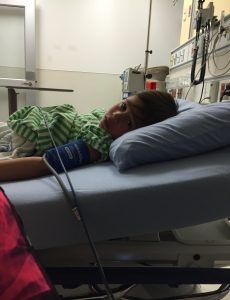
When I was younger, my symptoms were incredibly severe. Every 21 days, I would be incapacitated for an entire week with a severe sickness. In my case, a flare would include a high-grade fever, immense loss of energy, crippling joint pain, large ulcers in my mouth, and an unbearably sore throat. Having said that, during grade seven, I went through an entire year without a single flare. Within this period, I was under the assumption that I had grown out of PFAPA.
“I finally felt free from its hold on my life. However, soon after my 13th birthday, my symptoms had been restored.”
Feverless Flares
Following PFAPA’s return to my life, I began to exhibit unusual flare-ups. Instead of occurring once every 21 days, my fevers were now unpredictable and no longer followed any pattern. During this time, I then started to experience what is known as a feverless flare. This means that I would chronically endure the effects of PFAPA without the fever, which heavily impacted my basic functionality as I felt unwell at a significantly higher frequency.
School and Advocacy
With or without the fever, when experiencing such symptoms, I would be utterly bedridden and unable to attend school. Though my sickness was undeniably severe, its rarity made it difficult for schools to accommodate. Throughout my entire education, I’ve struggled with frequent absences, which ultimately lowered my overall understanding of subject material. Instead of being excused for my medical condition, I’ve continued to be penalized. Regardless of my endless effort to inform my educators on the topic of PFAPA, my grades and relationships with teachers have suffered heavily. After missing a week’s worth of class, I have been expected to complete all missing assignments, while simultaneously keeping up with the course’s pace and preparing for my next flare. Personally, I believe my struggle with PFAPA directly highlights the importance of advocating for students within the educational system to receive the support they need. Teachers and district officials should be well-informed on the wide variety of chronic health conditions that frequently impact children so that each student can be adequately supported during their journey through school.

The Impact on Physical Health, Mental Health, and Friendships
Apart from my education, my physical health has been much impacted by PFAPA. Furthermore, team sports and healthy living have never been on the table for me due to my inability to maintain any type of schedule. Although I feel considerably passionate about a variety of sports and activities, my health does not allow me to enjoy these luxuries regularly.
Regarding my social life, PFAPA has influenced most relationships that I have ever managed to form. I have had minimal time to build connections with my peers due to the constant catch-up I am playing at school, and I frequently feel too unwell to spend time with my loved ones. These factors combined have ultimately limited my ability to maintain or build a typical social life for a person of my age.
The combination of these life-altering components has led to a major decline in my mental health. Living with PFAPA has taken from me numerous opportunities, experiences, and most importantly, a sense of normality. Feelings of excitement, stress, sadness, and anger can all trigger a flare. As a child, I was not even able to enjoy my trip to Disneyland without an intense flare ruining my experience. In addition, the excitement of opening gifts on Christmas morning has never failed to make me unbelievably sick. Losing my sense of relatability, normality, and ability to connect with others has put an inescapable hold on my mental well-being. Constantly, I feel upset and angry that I have had to suffer through such tribulations. However, as of recently, I have found gratitude for my experiences. Although my set of challenges appears far from desirable, I have been granted the opportunity to spread awareness on this topic, which has provided me with a highly sought-after sense of purpose.
Gratitude and Growth
Though PFAPA has flooded my life with negativity, it has also had a variety of beneficial effects. Due to this condition, I have developed an array of favorable life skills such as resiliency, mental fortitude, perseverance, and adaptability. In addition to the evolution of my advantageous personal characteristics, I have gained a deep appreciation for the treatment accessible to PFAPA patients in Canada. The rheumatology clinic at BC Children’s Hospital has been nothing short of remarkable. Ranging from the day of my diagnosis to current times, I have been blessed with the highest caliber of support during my battle with this sickness. With the assistance of this talented team of doctors, I have been able to try medications, participate in studies, and even receive a tonsillectomy with the hopes of curing my condition. Although some of these attempts failed to improve my illness, I am still inconceivably grateful for the effort that these doctors have put into improving my quality of life.
Advice for Others
One piece of advice that I could give to anybody beginning their fight with PFAPA is to stay positive throughout each moment of misfortune. Although the majority of this dissertation has emphasized the negative impacts that PFAPA has inflicted upon me, I have still been able to live an exceptional life outside of my sickness. I have briefly competed in the sport of boxing, traveled the world, maintained a part-time job, and put myself enroute for an early graduation from high school. Regardless of this adversity, I can confidently say that I have finally found a sense of satisfaction within the limits of PFAPA.
Kai’s Message
Overall, PFAPA certainly has its highs and lows. It has both negatively and positively impacted my life in many ways. Nonetheless, I will continue to be appreciative of the life that I have been provided with. Regardless of its difficulty, I am extremely thankful to have experienced the effects of PFAPA. It has enabled me to share my story with the world, spread awareness on the topic, and draw attention to the unspoken need for children with chronic health conditions to receive adequate support.







Leave A Comment